


In the News
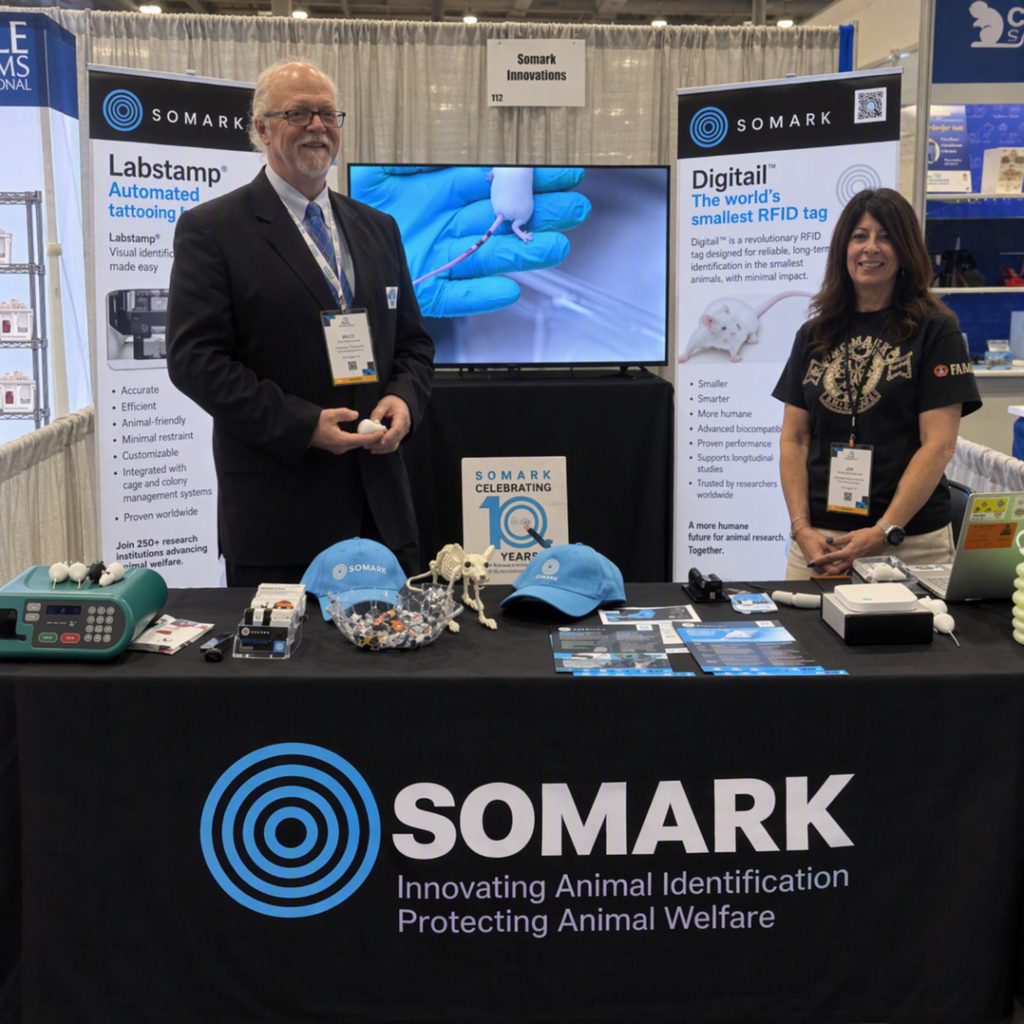
Somark Innovations at AALAS 2026
Somark Innovations Reflects on Conversations from AALAS 2026
Looking back on AALAS 2026 in Houston, one thing became clear: laboratory animal facilities are continuing to look for practical solutions that improve both research quality and day-to-day operations.
While technology remains an important part of that discussion, many of the conversations at this year’s event centred around people. Facility managers, veterinarians, researchers and animal care teams all shared similar challenges, from maintaining accurate records and supporting compliance requirements to implementing refinements that can make a meaningful difference to animal welfare.
For Somark Innovations, these discussions provided valuable insight into how priorities across the industry continue to evolve.
Advancing Animal Welfare Without Compromising Operational Efficiency
Throughout AALAS 2026, many of the discussions at the Somark booth centred on how facilities can continue improving animal welfare while managing increasing operational demands. From large academic institutions to contract research organisations, attendees highlighted the need for solutions that support both scientific integrity and day-to-day efficiency.
Many attendees expressed interest in solutions that support refinement initiatives without creating additional administrative burden for technicians and research teams. As facilities manage growing study complexity alongside stringent record-keeping requirements, technologies that simplify routine processes are becoming increasingly valuable.
What Somark Learned About Animal Identification Priorities
Conversations with researchers, veterinarians and facility managers reinforced the importance of dependable identification throughout the research lifecycle. Many attendees were looking for ways to reduce handling stress, improve traceability and simplify record-keeping, all while maintaining confidence in the accuracy of their identification methods.
One topic that generated significant interest at the Somark booth was the size of the Digitail RFID tag compared with traditional glass transponders. Visitors were keen to learn more about how the miniature RFID technology can provide reliable animal identification while minimising the implant footprint. These discussions highlighted the growing focus on refinement strategies that support both animal welfare objectives and operational requirements.
AALAS remains one of the most important opportunities for the laboratory animal science community to share knowledge and discuss evolving best practices. We were delighted to reconnect with existing customers, meet new faces and learn more about the challenges facilities are navigating today.
Thank you to everyone who visited the Somark Innovations booth in Houston. We look forward to continuing the conversations started at AALAS 2026 and supporting organisations as they explore new approaches to animal identification, research quality and animal welfare.