


In the News
What’s in an Ear? Considerations if using the ear for identification
We all recognize a mouse (and let’s not forget their cousins, the rats) by their ears. Whether it’s a cartoon character or our lab mice, they all have ears. Of course they are for hearing, but the ears of a mouse are highly specialized and deserve consideration during care and use. I want to review the mouse ear; to be sure we fully consider the impact before using it for identification.
In a previous post, I spoke about the statistical importance of having a unique identifier on each of our research subjects. Two very common methods are based on ears – ear tags, and the ear punch system. Both of them can severely compromise the biology and welfare of the mouse – and that in turn can compromise their performance and the validity of any data.
Ear Tags
Ear tags have been around for ages and are a common method for many researchers. They solve one objective – a unique identifier for every mouse (as long as two groups in the same facility do not use the same ear tag numbers!). The problem is, they can be hard to read and this raises potential for mistaken identity.
To be permanent, an ear tag must be properly placed. This means putting the tag deep into the ear below the cartilage ring so it won’t tear out, but this makes it harder to read. Place the tag further up the ear, where it is easier to see, and the risk of it tearing out goes up.
Whether it be the welfare-driven desire for a smaller tag or the request for more than 4 digits on a tag, the characters on ear tags have reportedly been getting smaller, hence harder to read. In Figure 1, you can see an ear tag that appears to be upside down. The part of the ear tag that joins together is on the inside of the ear after placement, but if they scratch at it, they can turn it around as this mouse has done! They are hard enough to see, and now we need to be sure our 6s are not 9s.
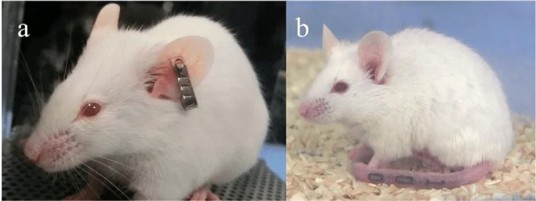
Figure 1: Two forms of visible ID, ear tag that can invert and tail tattoo that remains in position.
These are all issues that arise when ear tags are at their best. There are more issues we should be concerned about.
When we want to assess pain and distress for an animal who cannot tell us, we ask the question: “Would it be painful to humans?” If we take a common ear tag and average sized mouse, and extrapolate that to average human dimensions, we find that the ear tag would equate to a 7-inch object weighing over two pounds hanging off an ear. My ears aren’t pierced, but I am pretty sure I would find that painful and certainly distressing.
In many facilities, vet techs are charged with various tasks to support the health of the animals. It is not uncommon for an ear tag to become infected – the tag always moves about and the edges of the piercing can stay raw. Applying antibiotic ointment to the infected ear may be necessary for the well being of that mouse, but it means a lot of time spent, and variables introduced, to that individual mouse.
MRI Complications
Common ear tags are metallic, and this means they cannot be in the animal during an MRI. The ear tag will cause distortion of the image, and the tag may be pulled from the ear. Facilities ban the use of metal ear tags in studies where MRI or CT will be employed. Let’s consider a study that does not plan on MRI, but the initial findings lead us to consider adding MRI? One imaging center I visited reported that they would remove the ear tag for the MRI and then try to reposition it back into the ear after the imaging. If you’ve ever worked with these, imagine how trying that must be for the technician and the mouse.
Ears and Hearing
Mice communicate at a very high frequency – they can hear up to 90kHz, though best at 10kHz-20kHz. (Rats hear best from 5kHz-40kHz). Sounds in this range do not pass through solid material. Acoustic researchers who wish to isolate one ear of a mouse have a simple approach: they tape the pinnae of one ear down. High frequency sounds don’t pass through the skin. This means that if the heavy ear tag causes the ear to flop down, as seen in the picture, we have inadvertently made the mouse deaf in one ear. This surely affects their behavior and their ability to communicate with one another. All you have to do is plug one ear, after swimming perhaps, to see for yourself.
A quick cage side observation of active mice shows us how active the ears are, often turning to pick up on noises we likely cannot hear. Locating the presence of a cage mate, communicating messages, this is all part of their normative behavior. If we add weight, or holes, or an obtrusive object, we are compromising them.
Even the barcode scannable ear tags, marketed as lightweight, can still distress an animal by affecting their hearing, adding some weight to that side of the head, and potentially causing damage or infection as they shake their heads, scratch at the object, or otherwise fiddle with it. This table shows the weight of various objects used to add ID to a mouse. While some products now include a “mini” version, the reduced weight is still a dramatic impact to the frail tissue of a mouse ear. All of these ear tag products weigh considerably more than a Digitail RFID tag, which is placed into a more durable tissue, the tail versus the ear.
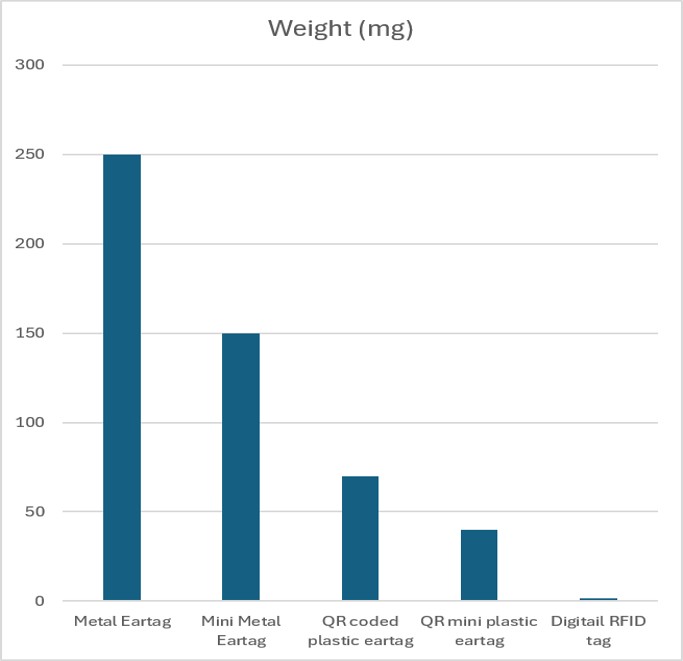
| Mouse ID product | Weight (mg) | % of mouse weight | comparable weight (oz) for a person | Location |
| Metal ear tag | 250 | 1.25% | 36.00 | Ear |
| Mini Metal ear tag | 150 | 0.75% | 21.60 | Ear |
| QR coded plastic ear tag | 70 | 0.35% | 10.08 | Ear |
| QR mini plastic ear tag | 40 | 0.20% | 5.76 | Ear |
| Digitail RFID tag | 1.5 | 0.01% | 0.22 | Tail |
Product weights – from manufacturer websites
% of mouse weight – based on 20 gram mouse
Comparable weight for person – based on 180 pound person
The Mouse Grimace Scale is a means of assessing well-being or states of distress based on behavioral cues expressed by the mouse. One factor in this is the position of the ears. Are they forward, indicating a calm inquisitive state, or are they pinned back, a sign of fear or aggression? As we can see in Figure 2, this mouse cannot present his ear in a normative forward position. If his cage mates expect to judge his nature based on these signs, they will have difficulty in this case as ear position is not in any of the behaviorally described states. (He is exhibiting several other signs of distress from the MGS too!)
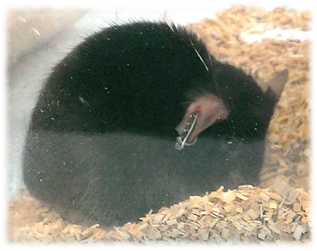
Figure 2: Ear tagged Mouse. Note the folded ear, the redness at the base, and how the tag has moved
Ear punching mice
Ear punches, 1 or 2mm holes punched through the ear, can cause similar issues. Lesser affects on hearing, predisposing them to tears and other trauma, and the potential infection.
Some ear punch codes take a minimalist approach. Only one or two holes per mouse to minimize the impact. In this approach, the numbering can be 1 to 5 or 1 to 20. Methods with greater number capacity, say 1-100 or 1-1,000 require precise placement and combine holes and notches. This is fine, until a hole gets torn into a notch. Ouch is right. One company that produces a lot of mice dealt with the variability of ear punches. Rather than a system of punches or notches, they simply slice the top off one of the ears. This gives a 1-5 measure that is easy to read, but somewhat drastic for the mice.
Welfare and Behavioral Impact of Ear-based ID
J Roughan (Newcastle University) and Catherine Burns (Royal Veterinary College) have published studies on the impact of ID method on welfare and behavior. Roughan looked at Automated and Manual Home Cage Scoring, Mouse Grimace Scoring, Light/Dark preference, and Voluntary Interaction in comparing ear tagging with Labstamp automated tail tattoos. Given these results and the reliability of the tail tattoo, they concluded that “there is little justification for choosing ear tagging over tail tattooing.”
Burns et al. looked at ear punching and tail marking of mice, and found behavioral deficits in the ear-punched mice suggesting pain and anxiety that persisted as far as 5 weeks after the ID was performed. They even found behavioral changes in the cage mates of the ear tagged mice!
Various behavioral assays (mazes) require the mouse to traverse in a narrow pathway toward a reward. I found no studies that investigate the potential impact of objects in the ear, or associated sensations from them, that may impact decision making as the ear tagged animal navigates through a maze, but observation of the head tilt leads me to deduce it is a potential variable.
Ears and Thermoregulation
It is bad enough that using the ear for ID can lead to infections, can impair hearing, and can be a stressful weight to carry around.
Mice also use their ears for thermoregulation. Increasing blood flow in the ears helps them cool off when they get too warm (much like elephants, though on a much smaller scale). When we look at the vascularization of the ear, we can see how adding holes could affect the circulation.

Figure 3: Mouse Ear Vasculature
The Healing Process
There are reports that ear punches may heal over and close up over time – not unlike a human pierced ear. This becomes a risk for misidentification over time and also points out that when we wound an ear as a method of ID, a healing process ensues with cytokines doing their thing to control the process. This becomes a risk of inter-study variability, as one animal may have a single hole to heal in one ear, and another animal might have one or more wounds in each ear. Add to that the potential for a torn ear taking longer to heal, and you can see how this becomes a new variable in our mouse study cohort.
Ear Punch Codes
I took a look at various published ear punch codes. Sure enough, they all look pretty reasonable when you just look at it on paper. But when a single mouse is presented, you have to question where that punch was – is it on the middle, or the bottom of the ear? Was that a punch that got torn, or is it a notch?
The coding key uses a similar approach in all high number cases. Three locations on each ear, and either 1 or 2 notches, or a punch, at each location. However, some of the diagrams (I am not disclosing who posted which ones, but each of these images was used by more than one facility) show the positions as inside-top-outside, others show top-middle-bottom. So, while a hole in the top is #1 in one system, it’s number 2 in another. Then there is the group that reversed it – putting the ones in the right ear and the tens in the left. And naturally, if the code only goes 1 to 6, they spread that out over both ears.
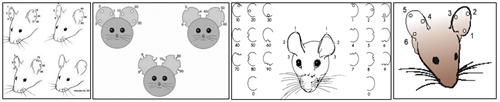
Figure 4: Ear Punch Codes. (L-R) Standard, Altered Positioning, Reverse, and Reduced Numbers. A hole in the top of the right ear can be 1,2,10 or 5.
Alternative ID Methods
In summary, ID methods that use the ears are introducing stress to the animals and variability to the data. (The same can be said of toe clipping, which is another topic.) There is a nicely detailed review article on how little we know about these impacts, and I will echo one of the points they discuss: further study needs to be done on the impact of ear punches and tags. See: https://www.ncbi.nlm.nih.gov/pmc/articles/PMC5700778/
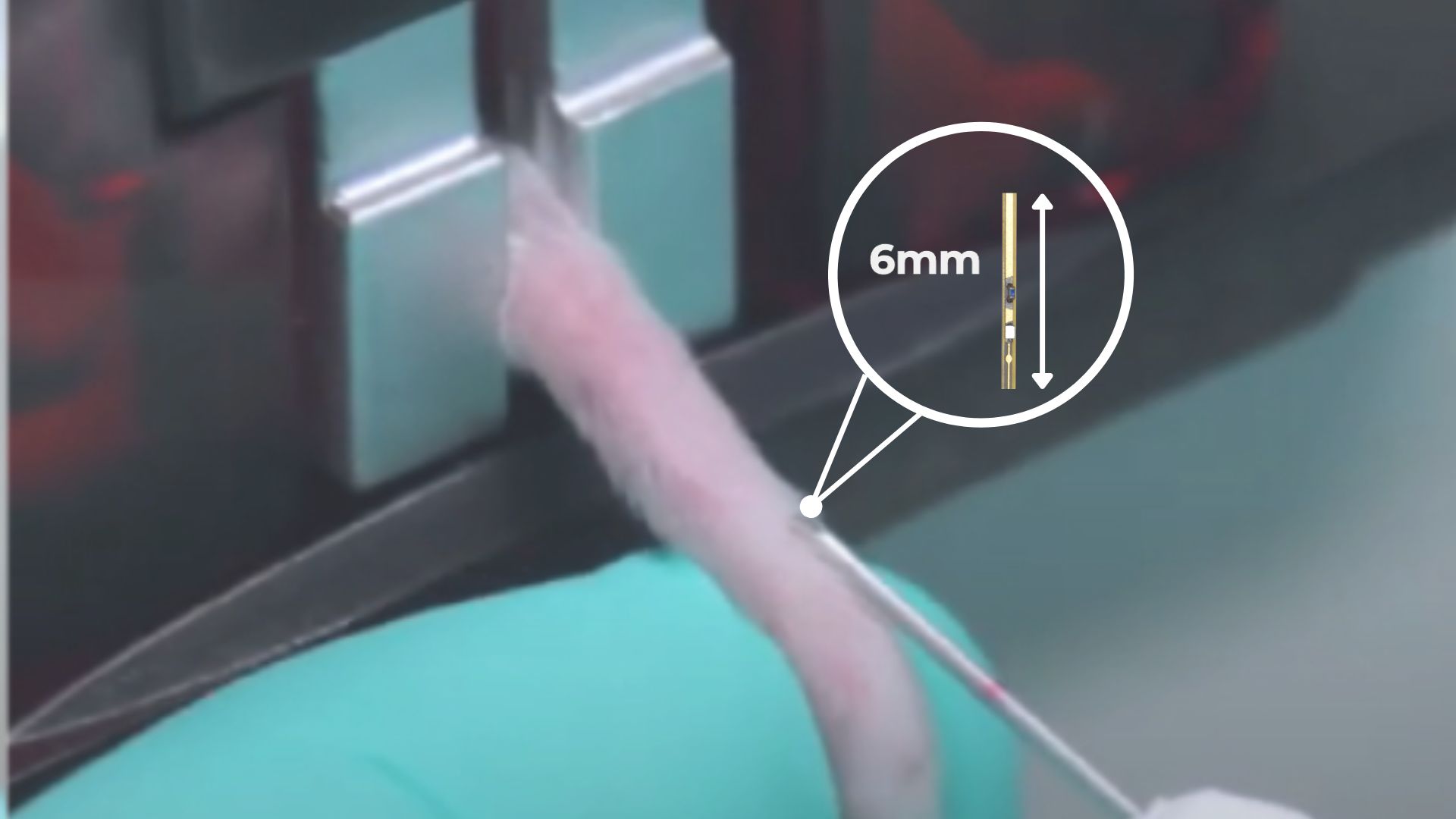
If this concerns you, and I think it should, what are the alternatives? I can suggest two. An automated tattoo system that provides a permanent visual ID on the tail is one. An RFID tag that is small enough to fit into the tail is another. These range from 99 to 100% reliable in their readability. And yes, there is a healing process after a tattoo or a subcutaneous implant, but it will be more consistent amongst the animals on a study than these ear methods, and won’t cause complications to their normative behavior.
To learn more about Somark alternatives for reduced trauma and better data, visit somarkinnovations.com. If you are interested in performing studies to quantify the stress introduced by some of these ear methods, please reach out to me directly.
Thank you for your concerns about research animal identification.
Author: Eric Arlund, updated August 2026 – please contact Eric at earlund@somarkinnovations.com if you would like to discuss any of the topics raised in this article.
References
https://www.nationalband.com/la-1005-1/#toggle-id-4 eartag weight 250mg
https://agnthos.se/rapid-barcode-tags/1018-rapid-tags.html RapidTag weight 65mg
https://www.somarkinnovations.com/products/digitail-tag/ Digitail volume equates to ~1mg mass.
https://pubmed.ncbi.nlm.nih.gov/30813985/ Welfare and Scientific Considerations of Tattooing and Ear Tagging for Mouse Identification (Roughan et al)
https://pubmed.ncbi.nlm.nih.gov/34204900/ The Pen is Milder than the Blade (Burn, et al)